Sun. 22 Feb 2026
❄️ -1°C in Columbus
Date: 16-may-2025 | By: Nuztrend Team

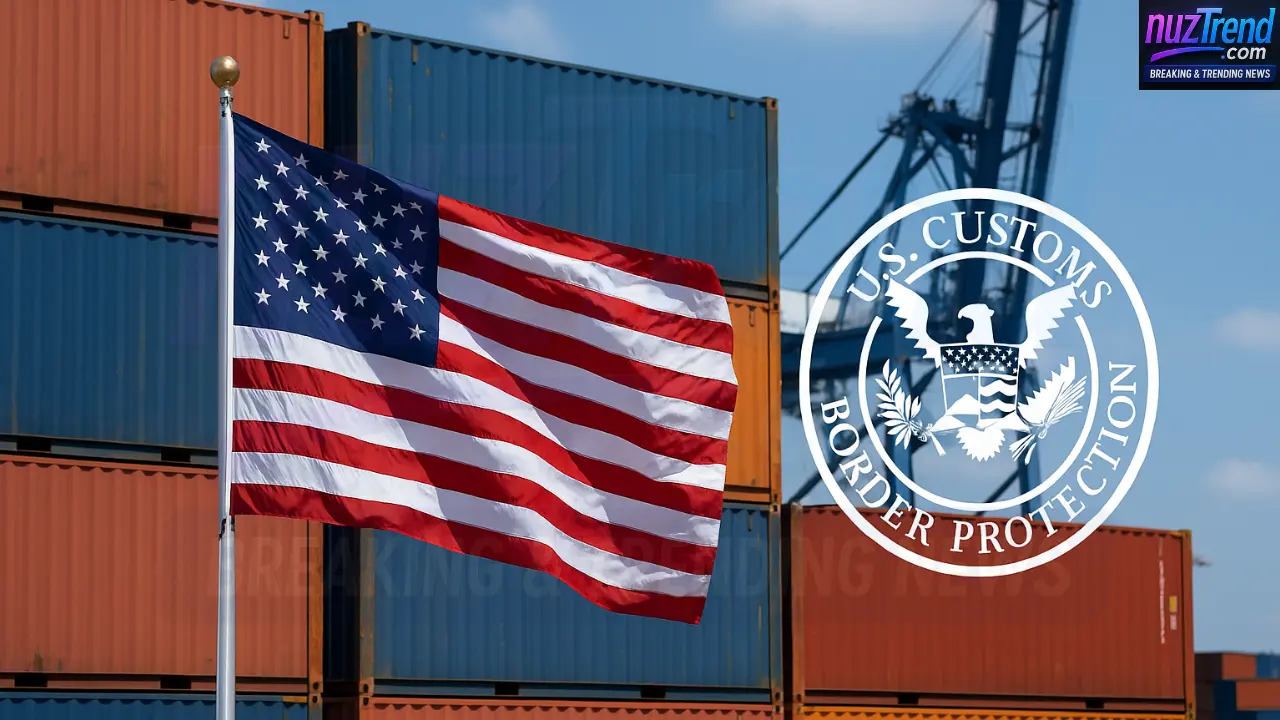
Image By Hummelhummel, CC BY-SA 3.0, Link
Chinese factories are working overtime, ports are humming, and shipping containers are piling up. Following the US and China’s agreement on May 13, 2025, to a 90-day tariff pause, Chinese firms are scrambling to flood the US market with goods before the temporary truce expires. This unprecedented export surge, driven by slashed tariffs—down from 145% to 30% on Chinese imports to the US and from 125% to 10% on US goods to China—has set global trade abuzz. But what’s fueling this frenzy, and what does it mean for businesses, consumers, and the global economy?
The stakes couldn’t be higher. With the tariff pause set to end in mid-August 2025, Chinese exporters, particularly in manufacturing hubs like Guangdong and Shenzhen, are racing to capitalize on the lower tariffs. The move could reshape supply chains, influence consumer prices, and test the fragile US-China trade relationship. As the clock ticks, the world watches to see if this is a fleeting opportunity or a sign of lasting change.
The catalyst for this export boom is the temporary easing of trade tensions between the world’s two largest economies. After months of escalating tariffs that threatened to choke global trade, the US and China agreed in Geneva to a 90-day pause, effective May 14, 2025. The deal, hailed as a diplomatic breakthrough, aims to provide breathing room for negotiations to avert a full-blown trade war. But for Chinese firms, it’s a narrow window to maximize profits before uncertainty returns.
“We’re shipping as much as we can before the window closes,” said Li Wei, a manager at a Shenzhen electronics factory. “No one knows what tariffs will look like in three months.”
This export rush is sending ripples across the global economy. Chinese ports like Yantian and Ningbo are reporting record container volumes, with shipping rates spiking as demand outstrips supply. US ports, from Los Angeles to New York, are bracing for a flood of goods, which could strain logistics and delay deliveries.
The sudden surge is stressing global supply chains already battered by years of trade disputes and pandemic disruptions. Shipping companies are struggling to provide enough containers, and freight costs have jumped 15% in the past week alone, according to Bloomberg. Small and medium-sized Chinese firms, unable to secure shipping slots, risk missing out on the opportunity.
For US consumers, the tariff pause could mean lower prices on goods like smartphones, clothing, and toys in the short term. Retail giants like Walmart and Amazon are stocking up to meet holiday demand, passing on some savings. However, if tariffs return, prices could spike, adding pressure to inflation-weary households.
Global markets have responded with cautious optimism. The S&P 500 rose 3.2% after the truce announcement, and China’s CSI 300 index gained 2.8%. Yet, analysts warn that the rush could lead to oversupply in the US, potentially destabilizing markets if the truce collapses.
Chinese firms aren’t just reacting—they’re strategizing. Many are diversifying export destinations, with increased shipments to Europe and Southeast Asia, to hedge against US market volatility. Beijing is also bolstering domestic support, with the People’s Bank of China injecting $138.5 billion in liquidity this week to stabilize manufacturing and exports.
The government is encouraging firms to prioritize high-value goods like semiconductors and electric vehicle components, aiming to strengthen China’s position in strategic sectors. This aligns with China’s broader push to reduce reliance on US markets, a trend accelerated by years of trade tensions.
As the 90-day pause ticks down, the world is watching Geneva’s trade talks closely. Will the US and China reach a lasting agreement, or will tariffs return, plunging markets into uncertainty? For Chinese firms, the strategy is clear: ship now, worry later. But the risks are significant. An oversupply in the US could lead to price drops and losses if demand falters, while failed talks could trigger retaliatory tariffs, hitting exporters hard.
Consumers, meanwhile, face a mixed outlook. Short-term savings are possible, but renewed trade barriers could drive up costs for everything from electronics to clothing. For policymakers, the challenge is balancing economic growth with diplomatic progress in a volatile global landscape.
“This is a critical moment for global trade,” said Sarah Johnson, a trade analyst at Goldman Sachs. “The next 90 days will shape markets for years to come.”
As Chinese factories churn and ports hum, the export rush underscores the high stakes of the US-China trade relationship. With time running out, the world waits to see if this truce can hold—or if it’s just a brief pause in a longer economic battle.
Chinese exports 2025, US-China tariff pause, trade war 2025, Chinese firms export rush, US tariffs 2025, global trade impact, China economy 2025, tariff truce US-China, export surge China, US trade policy, China manufacturing, global supply chain, US-China trade talks, tariff impact consumers, China trade strategy


No comments yet! Be the first one to comment.

Date: 16-May-2025
Japan’s economy contracted by 0.7% in Q1 2025, marking the first decline in a year. This slowdown is driven by weakened exports and sluggish domestic consumption amid ongoing global trade tensions and economic uncertainty.

Date: 17-May-2025
Millions still follow the outdated 9-to-5 grind, but schools never revealed the harsh truths about how real wealth is built. Here are 7 eye-opening money truths no teacher ever told you.