Thu. 26 Mar 2026
☁️ 19°C in Columbus
Date: 04-apr-2025 | By: Nuztrend Team
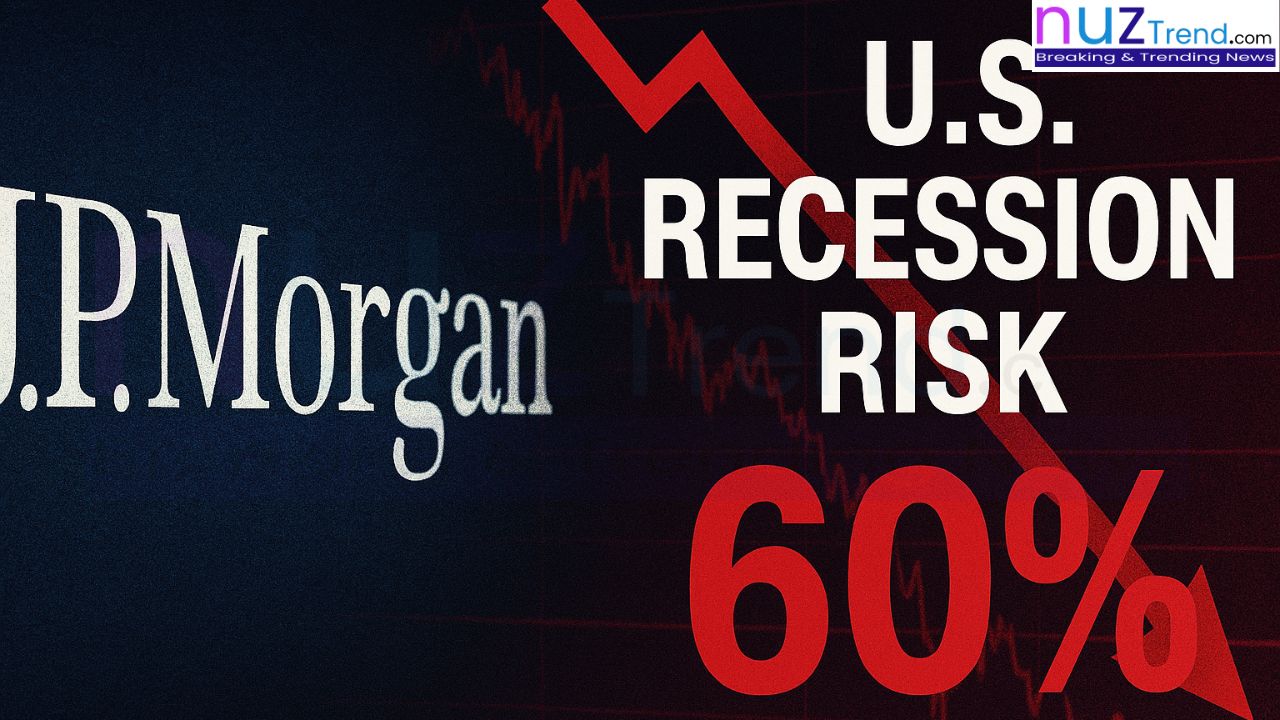
As global markets reel from the impact of sweeping new U.S. import tariffs, JPMorgan has issued a stark warning: the probability of a U.S. recession in the coming quarters has now risen to 60%. The updated forecast, released on April 4, 2025, follows a week of financial instability, trade tensions, and sharp corrections in equities worldwide.
The revised outlook comes after former President Donald Trump unveiled a tariff package that includes a blanket 10% duty on all imports and higher rates—up to 49%—on goods from countries like China and Vietnam. The announcement, part of what Trump calls “economic liberation,” has raised fears of a global trade war and structural disruption to supply chains.
According to the report, JPMorgan analysts believe the new tariffs could:
“We believe the recent tariff escalation represents a serious economic shock,” JPMorgan stated. “It undermines business sentiment, reduces forward investment intentions, and weakens trade volumes globally.”
U.S. stock indices experienced their worst performance since the pandemic era:
Asian and European markets also faced steep losses. Meanwhile, the U.S. dollar weakened, and gold prices surged as investors sought safe havens.
JPMorgan’s warning comes amid growing anxiety in corporate boardrooms. Several multinational firms have voiced concern over rising import costs and potential retaliation. The National Retail Federation in the U.S. issued a statement saying, “These tariffs will ultimately be paid by American consumers.”
Economists are also adjusting GDP growth forecasts. Initial estimates for 2025 growth have been trimmed by 0.6 to 0.9 percentage points by several global banks.
As the Federal Reserve weighs its next move, the pressure is mounting. Rate cuts could be on the table if consumer demand softens further and inflationary pressures persist. However, with stagflation concerns also on the rise, policy responses are becoming increasingly complex.
Investors are now advised to monitor:
While a 60% recession probability is not a certainty, it represents a significant shift in sentiment — one that may soon reshape both markets and policymaking agendas.


No comments yet! Be the first one to comment.

Date: 04-Apr-2025
The Indian rupee opened stronger at 85.28 against the U.S. dollar on April 4, 2025, driven by dollar weakness after Trump’s tariff announcement sparked global market concerns.

Date: 04-Apr-2025
On April 4, 2025, the Indian stock market closed significantly lower due to escalating global trade tensions. The BSE Sensex fell by 931 points to 75,364.69, and the Nifty 50 declined by 345.65 points to 22,904.45. Major sectors, including metals and pharmaceuticals, experienced substantial losses. Investors remained cautious amid uncertainties surrounding international trade policies.