
North Korea Tests New Russian-Backed Air-to-Air Missile from MiG-29 in Strategic Show of Force
Date: 18-may-2025 | By: Nuztrend Team
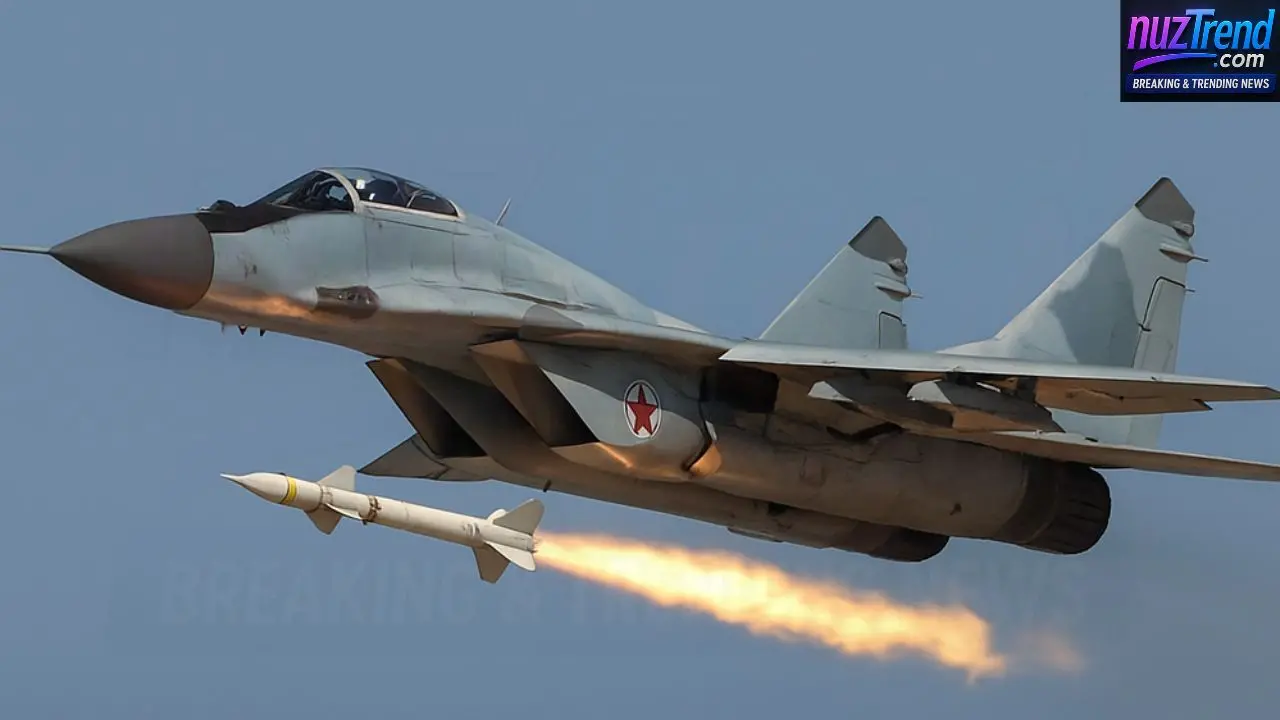
In a bold demonstration of military capability, North Korea has conducted a successful live-fire test of a newly developed air-to-air missile, launched from a modified MiG-29 fighter jet. Defense analysts and regional observers are raising concerns that the weapon may incorporate advanced Russian technology, potentially enhancing Pyongyang’s outdated aerial combat systems.
The launch, which took place under the observation of top North Korean officials, comes amid rising military tensions in East Asia and follows a string of provocative weapons tests by the regime in recent months.
What We Know About the Missile Test
MiG-29 Gets a Modern Makeover
The test involved a Soviet-era MiG-29, long considered one of the more advanced fighters in North Korea’s aging fleet. However, the star of the show was the missile itself — a new air-to-air system that experts believe resembles the design and performance characteristics of Russian R-73 or R-77 missiles.
State-run media showcased footage of the jet releasing the missile, which appeared to use infrared homing and radar-guided systems. Its maneuverability and lock-on capability during the live-fire test suggest a level of sophistication far exceeding previous North Korean air weaponry.
Russian Technology Allegedly Behind the Missile
While Pyongyang has not officially credited any foreign assistance, multiple defense analysts suspect the missile incorporates Russian design elements. This could have been achieved through unauthorized procurement, reverse engineering of older Soviet hardware, or cooperation with third-party suppliers operating in violation of international sanctions.
- Missile design closely resembles the Russian R-77’s active radar guidance system
- Flight characteristics align with Soviet-era K-13 upgrades
- Possible illicit components smuggled through black-market channels
If confirmed, this development could indicate deepening military ties — direct or indirect — between North Korea and Russia, particularly concerning given current geopolitical frictions and sanctions evasion tactics employed by both nations.
Strategic Implications in the Region
New Capabilities, Old Tensions
Historically, North Korea’s air force has been considered a weak link in its military apparatus. Its fleet includes decades-old aircraft with limited radar, avionics, and weapons systems. The addition of a modern air-to-air missile could drastically change operational dynamics — especially during close encounters with South Korean or U.S. aircraft in contested airspace.
Also Read


This test follows a recent uptick in joint U.S.–South Korea military drills, which North Korea continues to condemn as "provocations" and "preparations for invasion." The missile launch may have been a strategic response to these exercises, aiming to project power and reinforce deterrence.
Global Response and UN Concerns
The United States, Japan, and South Korea have condemned the test and are reportedly pushing for an emergency session of the UN Security Council. Though no formal resolution has been announced yet, diplomatic insiders suggest new sanctions could be proposed — particularly targeting components and entities suspected of enabling North Korea’s military advancements.
Past UN resolutions have already banned North Korea from acquiring or developing missile technology involving foreign nations, especially from states with nuclear capabilities. Any direct or indirect Russian involvement — even unintentional — could have serious diplomatic repercussions for Moscow.
Looking Ahead: What Comes Next?
While a single missile test does not revolutionize an air force, it sends a clear message: North Korea is actively working to modernize and diversify its weapons portfolio. Its ability to launch such a weapon from a MiG-29 is a tactical step forward and likely part of a broader strategy to keep adversaries uncertain and on edge.
Whether this leads to more frequent aerial testing or accelerates the development of indigenous air-to-air missiles remains to be seen. But one thing is clear: Pyongyang’s threat matrix is expanding, and policymakers in Seoul, Washington, and beyond are watching closely.


💬 Leave a Comment
📝 Recent Comments
No comments yet! Be the first one to comment.
🔄 Read More

⬅ Previous: Trump’s 2025 Budget Cuts to Ocean Data Services Threaten Maritime Safety and Planning
Date: 18-May-2025
President Trump’s 2025 budget proposes significant cuts to ocean data services, raising concerns among boaters, anglers, and forecasters who rely on accurate ocean information for safe navigation and weather planning.

Next: The Truth About Social Media Validation and How It Messes With Your Brain ➡
Date: 19-May-2025
Learn how social media validation is rewiring your brain, distorting your self-worth, and silently affecting your mental health — backed by neuroscience and psychology in 2025.