Mon. 23 Feb 2026
☁️ -3°C in Columbus
Date: 19-apr-2025 | By: Nuztrend Team

History was made in Beijing this week as humanoid robots ran alongside thousands of human participants in a 21-kilometer half-marathon — marking the first time such machines have joined a public endurance race. The event was more than just a spectacle — it was a test of robotics innovation in unpredictable, real-world conditions.
Organized by a coalition of Chinese tech companies and research institutions, the race featured dozens of bipedal robots, each equipped with advanced sensors, balance control algorithms, and semi-autonomous decision-making capabilities. The aim? To explore how robotic systems respond to dynamic human environments — not lab simulations.
The robots, which varied in size and design, maintained an average pace comparable to that of beginner-level human runners. Each unit was accompanied by a human technician for monitoring and safety, but most ran with minimal intervention. Some even completed the entire distance without rebooting or recalibration.
“This is not about speed,” said Dr. Liu Wenzhao, an AI systems engineer behind the project. “It’s about testing long-term endurance, environmental adaptation, and real-world motor coordination — essential for future industrial and public service robots.”
Unlike controlled lab environments, marathons introduce unpredictable factors like shifting terrain, weather changes, crowd interactions, and varying light conditions. The event provided researchers with valuable data to improve navigation algorithms, battery management systems, and real-time obstacle avoidance in humanoid designs.
Some robots stumbled, overheated, or required recalibration — but that was expected. “These challenges are exactly what we wanted to observe,” said Wenzhao. “Every misstep is a lesson in evolution for robotic technology.”
This event reflects a broader movement to bring humanoid robots out of the lab and into everyday human environments — from warehouses and hospitals to disaster zones and public events. Proving they can operate smoothly among unpredictable human activity is crucial to that transition.
China is aggressively investing in robotics as part of its 2030 national AI strategy, and this marathon was as much a publicity showcase as it was a scientific experiment.
While the race happened in Beijing, the implications are global. Companies like Tesla (Optimus), Boston Dynamics (Atlas), and Figure AI are all racing to develop humanoid systems that can work alongside humans. This marathon adds one more milestone in the timeline of human-robot coexistence — and may one day be seen as the first “footstep” in a world where robots truly walk among us.
In a world obsessed with speed, Beijing’s humanoid half-marathon reminds us that the race toward the future isn’t always about how fast we go — but how far we can evolve together. With robots now sharing the road — quite literally — the future of mobility, labor, and human-machine collaboration is running closer than ever.


No comments yet! Be the first one to comment.
Date: 18-Apr-2025
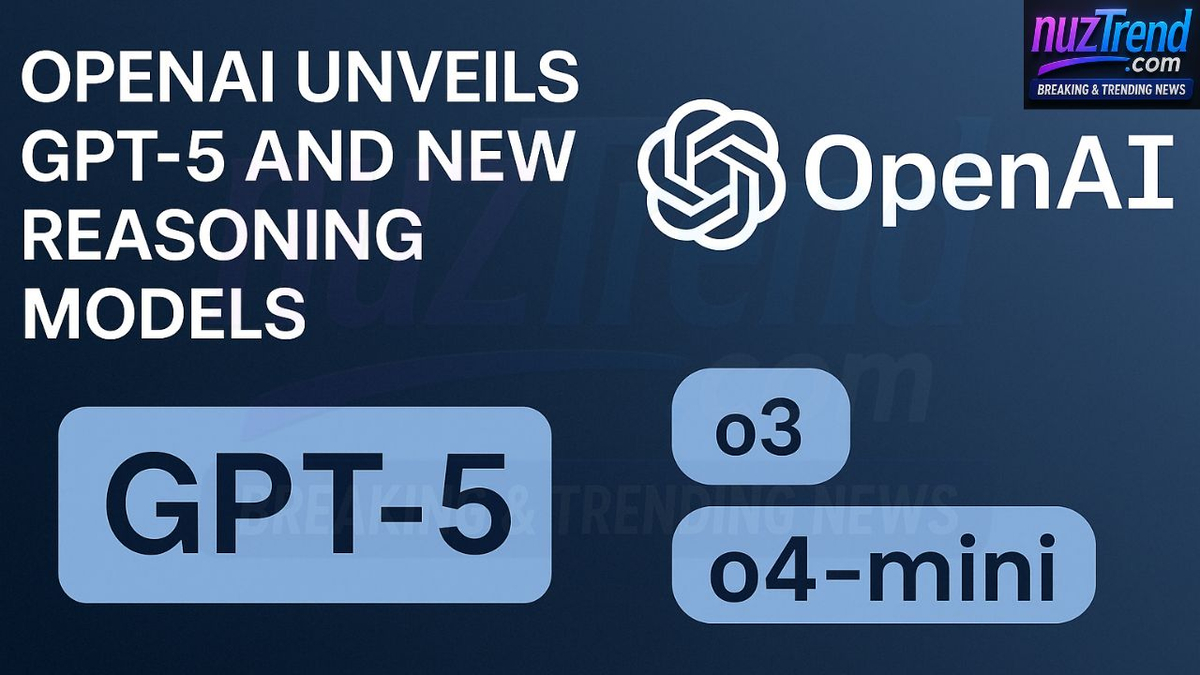
OpenAI introduces GPT-5 with 1.5 trillion parameters and launches two new reasoning models — o3 and o4-mini — revolutionizing AI coding, reasoning, and efficiency across platforms.

Date: 21-Apr-2025
Xiaomi introduces the Redmi Watch Move, its first smartwatch manufactured in India, with a vibrant AMOLED display, 140 fitness modes, and 14-day battery life.